
A mold inspection helps identify hidden mold growth and moisture problems that could affect your home’s air quality and structure. Whether you’re buying a home or noticing musty odors, a mold inspection can provide valuable insights and peace of mind. Trained professionals use specialized tools to detect mold in places you might not see.
Introduction to Molds
Mold is found in virtually every environment and can be detected indoors and outdoors, all year long. Mold growth is encouraged by warm and humid conditions. Outdoors it can be found in shady, damp areas or places where leaves or other vegetation is decomposing. Indoors, mold can be found where humidity levels are high, such as basements or showers.
Ten Things You Should Know About Mold
- Potential health effects and symptoms associated with mold exposures include allergic reactions, asthma, and other respiratory complaints.
- There is no practical way to eliminate all mold and mold spores in the indoor environment; the way to control indoor mold growth is to control moisture.
- If mold is a problem in your home or school, you must clean up the mold and eliminate sources of moisture.
- Fix the source of the water problem or leak to prevent mold growth.
 Reduce indoor humidity (to 30-60% ) to decrease mold growth by: venting bathrooms, dryers, and other moisture-generating sources to the outside; using air conditioners and de-humidifiers; increasing ventilation; and using exhaust fans whenever cooking, dishwashing, and cleaning.
- Clean and dry any damp or wet building materials and furnishings within 24-48 hours to prevent mold growth.
- Clean mold off hard surfaces with water and detergent, and dry completely. Absorbent materials such as ceiling tiles, that are moldy, may need to be replaced.
- Prevent condensation: Reduce the potential for condensation on cold surfaces (i.e., windows, piping, exterior walls, roof, or floors) by adding insulation.
- In areas where there is a perpetual moisture problem, do not install carpeting (i.e., by drinking fountains, by classroom sinks, or on concrete floors with leaks or frequent condensation).
- Molds can be found almost anywhere; they can grow on virtually any substance, providing moisture is present. There are molds that can grow on wood, paper, carpet, and foods.
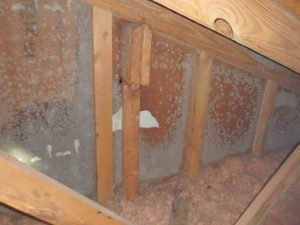 Reduce indoor humidity (to 30-60% ) to decrease mold growth by: venting bathrooms, dryers, and other moisture-generating sources to the outside; using air conditioners and de-humidifiers; increasing ventilation; and using exhaust fans whenever cooking, dishwashing, and cleaning.
How do molds affect people?
Some people react sensitively to mold exposure, often experiencing nasal stuffiness, eye irritation, wheezing, or skin irritation. For individuals with mold allergies, these reactions can become more severe. In addition, molds can trigger asthma episodes in people with asthma. To reduce health risks, individuals with asthma should avoid mold exposure whenever possible.
How Mold affect Homes
Water can enter your home in several ways. Leaks or seepage through basement floors often bring unwanted moisture indoors. Everyday activities like showering or cooking also release moisture into the air. The amount of moisture air can hold depends on its temperature. As air cools, it holds less moisture. That’s why, in cold weather, moisture often condenses on cold surfaces—like water droplets forming on the inside of a window. This excess moisture creates ideal conditions for biological pollutants, such as mold, to grow and spread throughout your home.
Ways to Control Moisture in Your Home
- Fix leaks and seepage immediately. Make sure the ground slopes away from your home to prevent water buildup near the foundation.
- Water in the basement may come from missing gutters or improper drainage that directs water toward the house.
- Repair leaks around pipes, tubs, and sinks. These areas can support mold and other biological growth if left damp.
- Cover crawlspace dirt with plastic to block ground moisture. Ensure crawlspaces are well-ventilated to prevent humidity buildup.
- Use exhaust fans in kitchens and bathrooms. Always vent moist air outside—not into the attic.
- Vent clothes dryers directly outdoors. Do not allow them to blow moist air indoors.
- If you see moisture on windows or surfaces, turn off humidifiers or kerosene heaters to reduce indoor humidity.
- Use dehumidifiers and air conditioners in hot, humid climates to control airborne moisture.
- Insulate cold surfaces to reduce condensation. Storm windows and interior insulation help prevent moisture buildup.
- Keep doors open between rooms and closets to improve air circulation and temperature balance.
- Avoid carpet on concrete floors. It can trap moisture and become a breeding ground for mold. Use washable area rugs instead.
Mold in Heating and Cooling Systems
Mold inspection in HVAC systems can be challenging because some parts are hidden. Ask your technician to show any mold found. If duct insulation is wet or moldy, it cannot be cleaned. Replace it to stop contamination. Correct the source of moisture. Otherwise, mold will return even after cleaning.